
The low loader is the trailer that makes heavy haulage possible. Whatever else is moving on a UK low loader fleet — excavators, generators, transformers, modular buildings, abnormal indivisible loads — it’s getting there because someone built a trailer capable of carrying serious weight at a low enough ride height to stay within legal limits and bridge clearances.
It’s also one of the most specialised and highest-value trailer categories in UK haulage. Unlike a curtainsider or a standard flatbed, low loaders vary enormously in capability, configuration, and manufacturer reputation — and that variation has a real and significant impact on what yours is worth. This guide covers the major European manufacturers, what makes their trailers more or less desirable in the UK used market, what your trailer is likely worth, and how to sell it without unnecessary delay.
What Is a Low Loader Trailer?
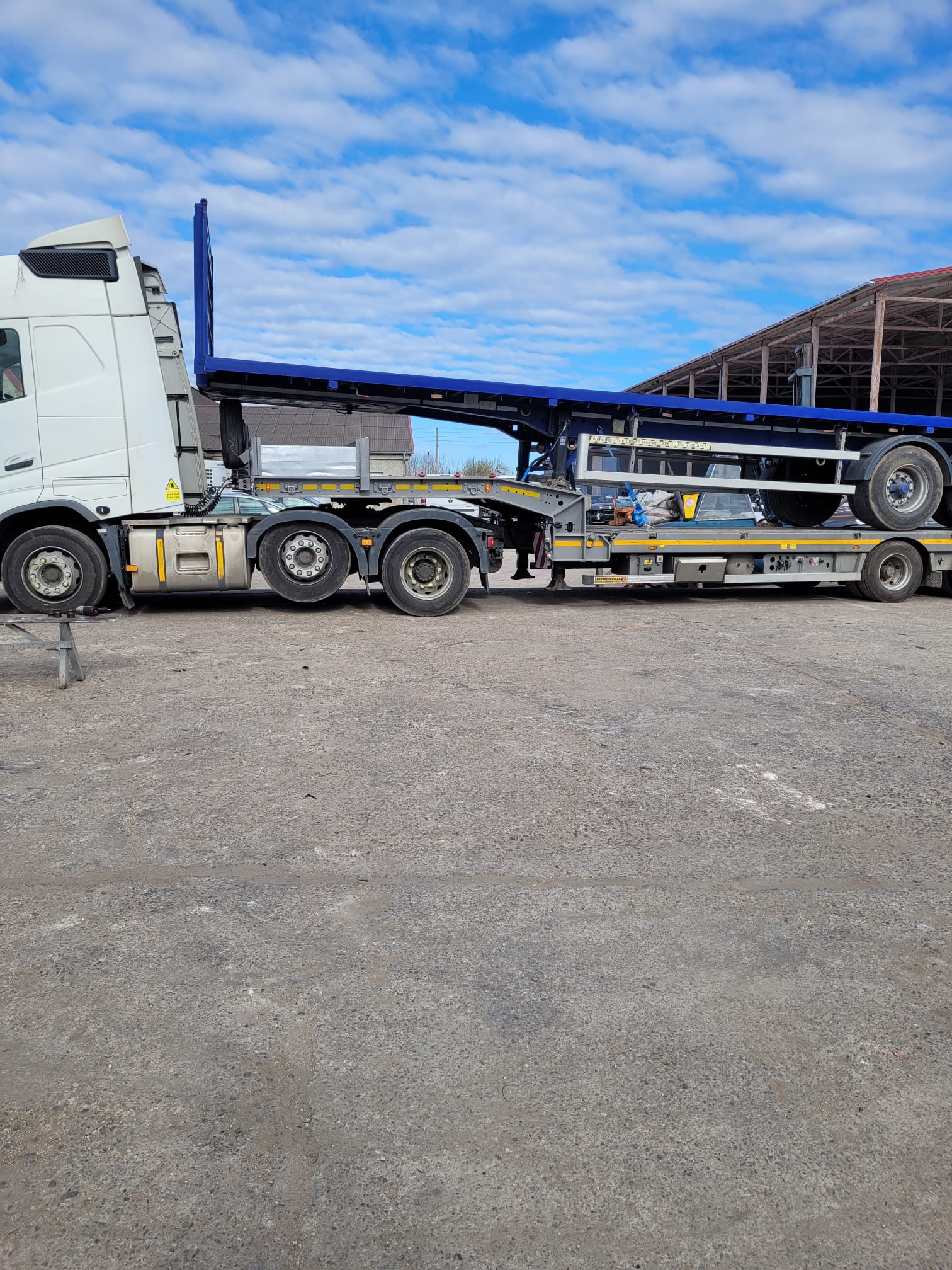
A low loader (also called a lowbed, low-bed, or lowboy) is a semi-trailer designed with a deck height significantly lower than a standard trailer — typically 700mm to 950mm off the ground, compared to around 1,200mm–1,500mm for a standard curtainsider. This lower deck height allows taller and heavier loads to be transported while staying within the UK’s overall height limit, and it lowers the centre of gravity for improved stability with heavy plant and machinery.
Key features that define most low loaders:
- Detachable or hydraulic gooseneck — allows the front of the trailer to be removed or lowered, enabling drive-on loading for tracked and wheeled plant
- Excavator trough (axle trough) — a recessed section in the axle bogie that allows a long-reach excavator boom to sit lower, increasing usable deck length without exceeding overall length limits
- Extendable chassis — many low loaders can extend in length (via sliding beam sections) to accommodate longer loads, then retract for standard road use
- Hydraulic ramps — flip-toe or sliding ramps for loading tracked and wheeled machinery under their own power
- Pendulum (pendle) axles — a steering and suspension system that improves manoeuvrability and reduces tyre scrub, particularly important on multi-axle configurations
The Major European Low Loader Manufacturers — and Why It Matters
Unlike curtainsiders or standard trailers, where the manufacturer matters less to resale value, low loader brand reputation has a real and substantial impact on what a trailer is worth. Buyers in this segment are typically experienced heavy haulage operators who know exactly which manufacturers offer the engineering, durability, and resale liquidity they’re looking for. Here’s how the major brands stack up.
Nooteboom (Netherlands)
Nooteboom is widely regarded as the benchmark manufacturer in the low loader and extendable trailer market, and that reputation is reflected directly in UK resale values. The company pioneered the patented Pendel-X (pendulum axle) system, which combines an excavator trough with genuinely excellent manoeuvrability — a combination that was difficult to achieve before Nooteboom’s design.
Top 3 Nooteboom models in the UK market:
- Nooteboom EURO-PX — the trailer that defined the category. Available in 2 or 3-axle configurations with a 12 or 14 tonne per axle line rating at 80km/h. The wide, deep excavator trough and pendulum axle steering give it best-in-class manoeuvrability, and it remains the most recognised and sought-after low loader in the UK used market.
- Nooteboom EURO-PX3 — the latest generation, with increased payload, a wider excavator trough, and an improved steering angle over the original PX. Newer examples command a clear premium and are highly sought by operators who need the latest payload and permit capability.
- Nooteboom OSDL / MCO Series — multi-axle semi-low-loaders used for heavier and larger abnormal loads; the OSDL stepframe extendable variants are particularly common in the UK fleet and trade well due to their versatility.
Why Nooteboom commands a premium: Build quality, parts availability through an established UK dealer network, and — critically — the brand’s resale liquidity. Buyers know a well-maintained Nooteboom will find a buyer quickly when their own circumstances change, which becomes self-reinforcing: strong resale liquidity is itself a reason buyers prefer the brand.
Goldhofer (Germany)
Goldhofer sits at the premium end of the low loader market, particularly for heavier-duty and modular trailer combinations. The brand is especially strong in the 6-axle-plus segment used for genuinely heavy abnormal loads.
Top 3 Goldhofer models in the UK market:
- Goldhofer STZ-L / STZ-VL — semi-low-loader range with stepframe deck design; a mainstay for heavy plant and machinery transport in the UK fleet.
- Goldhofer THP/SL — heavy-duty modular low loader platform; used for very large abnormal loads where standard trailers can’t cope, including transformer and turbine transport.
- Goldhofer Multi-axle low loaders (8-axle and above) — Goldhofer has particular strength in higher axle-count combinations for genuinely heavy, wide-load haulage, and these command strong premiums in the specialist UK heavy haulage market.
Why Goldhofer commands a premium: Engineering reputation for the heaviest and most demanding applications. Goldhofer is often the brand of choice when a job is right at the edge of what’s possible on UK roads, and that reputation supports strong used values, particularly among specialist heavy haulage contractors.
Faymonville (Belgium/Luxembourg)
Faymonville has built a strong UK presence over the past decade and is now one of the most actively traded low loader brands in the domestic market, competing closely with Nooteboom for buyer attention.
Top 3 Faymonville models in the UK market:
- Faymonville MultiMAX — stepframe extendable low loader, widely used across UK plant and heavy haulage operators; one of the most common Faymonville models in UK fleets.
- Faymonville VarioMAX — a versatile, often semi-low-bed configuration with flexible axle arrangements; popular for its adaptability across different load types.
- Faymonville MegaMAX — designed for transporting taller and bulkier abnormal loads with a particularly low deck; sought after for wind turbine components and large plant.
Why Faymonville commands strong resale: The brand has invested heavily in UK market presence, dealer support, and parts availability over the past 10–15 years, closing much of the gap that used to separate it from Nooteboom in terms of UK buyer confidence. Faymonville trailers are well-regarded for build quality at a slightly more accessible price point than Nooteboom or Goldhofer, which broadens the buyer pool at resale.
Broshuis (Netherlands)
Broshuis has been manufacturing low loaders since 1956 and has a long-established, loyal following in the UK market, particularly among operators who value straightforward, durable engineering over the latest technology.
Top 3 Broshuis models in the UK market:
- Broshuis 3-axle extendable low loader — the most commonly traded Broshuis configuration in the UK; typically fitted with a rear self-tracking axle and front lift axle for manoeuvrability.
- Broshuis 4-axle extendable low loader — used for heavier loads requiring additional axle capacity; commonly specified with clip-on or flip-toe ramps.
- Broshuis Double Extender — a long-serving model line known for genuine reliability over extended service life; older examples are still actively traded and respected in the used market.
Why Broshuis holds value well: A reputation for straightforward, rugged engineering that’s easy to maintain and keep working over a long service life. Broshuis trailers tend to be valued by operators who run them hard and want minimal complexity — this isn’t a brand chasing the latest technology, and that’s exactly why many UK operators specifically seek it out.
Kässbohrer (Germany/Turkey)
Kässbohrer has expanded its UK presence significantly in recent years, offering a broad low loader range at a competitive price point relative to the established Dutch and German premium brands.
Top 3 Kässbohrer models in the UK market:
- Kässbohrer K.SLL — the core low-loader series, available in 2 or 3-axle configurations with hydraulic steering; designed with one of the lowest platform heights in the category.
- Kässbohrer K.SLA — extendable low loader range, widely available in 3, 4, and 5-axle UK configurations with rear steer and front lift axle as standard specification.
- Kässbohrer K.SLH — hydraulic steering low-bed series for heavier and wider load applications, including 9ft-wide configurations popular with UK plant haulage operators.
Why Kässbohrer is gaining UK traction: Strong new-trailer warranty support, competitive pricing, and a rapidly expanding UK dealer and parts network. While the brand doesn’t yet carry the same resale premium as Nooteboom or Goldhofer in the used market, values have been strengthening as the UK fleet of Kässbohrer trailers has grown and buyer familiarity has increased.
King Trailers (UK)
King is one of the most established British low loader manufacturers, building stepframe low loaders and slopebed trailers specifically engineered around the needs of UK plant and access equipment operators. The brand has a strong domestic following, particularly among smaller plant hire and groundwork businesses who want a trailer purpose-built for UK access and weight requirements without importing from the continent.
Top 3 King models in the UK market:
- King GTS 44 — the most commonly traded King model; a stepframe plant trailer typically specified with a rear lift axle, hydraulic double flip-toe ramps with slide in/out function, and hardwood flooring. Genuinely one of the most recognisable low loaders in the UK plant haulage sector.
- King Slopebed low loader — a lower-cost, simpler alternative to a full stepframe design; popular with operators moving smaller plant and access equipment who don’t need the deck height advantage of a stepframe.
- King 3-axle stepframe with outriggers — widely specified for access platform and smaller plant transport, often fitted with swing-out outriggers to the deck for added stability during loading.
Why King holds steady UK demand: Straightforward British engineering at a price point that suits smaller operators, combined with parts and service support that doesn’t require dealing with overseas supply chains. King trailers are less likely to attract export or specialist heavy-haulage buyers than Nooteboom or Goldhofer, but they have a loyal and consistent domestic buyer base among UK plant hire operators.
Montracon (UK)
Montracon is one of the largest trailer manufacturers in the UK, and while the brand is best known for curtainsiders and general haulage trailers, its low loader range — built under the MT designation — is widely used across UK plant, access, and forklift transport applications.
Top 3 Montracon models in the UK market:
- Montracon MT45 — the most common Montracon low loader in the UK fleet; typically specified with a front lift axle, hydraulic flip-toe ramps with slide in/out capability, mesh decking on sloped areas, and an air-operated neck ramp. Widely used for forklift and general plant access work.
- Montracon MT39 — a shorter-bed access trailer variant, popular for smaller plant and equipment transport where full-length capacity isn’t required.
- Montracon DM25 — a cheesewedge-style low loader with hydraulic ramps, commonly specified for general plant haulage with a simpler deck profile than the MT range.
Why Montracon trades well in the UK: Scale and familiarity. As one of the largest UK trailer builders, Montracon has an extensive dealer and parts network, and buyers across the country are comfortable with the brand’s specification and reliability. Montracon low loaders tend to attract domestic plant hire and access equipment operators rather than specialist heavy-haulage buyers, but the depth of the UK fleet keeps resale demand consistent.
Dennison (Ireland/UK)
Dennison is an Irish trailer manufacturer with a strong and longstanding presence in the UK low loader and step frame market, particularly for plant and truck-carrying applications.
Top 3 Dennison models in the UK market:
- Dennison step frame low loader — typically specified with BPW drum brakes, a rear lift axle, and extended alloy ramps; one of the most commonly traded Dennison configurations in the UK.
- Dennison extending truck carrier — a low loader designed specifically for transporting other commercial vehicles, fitted with a front kick-up flip and rear lift axle; popular with recovery and vehicle transport operators.
- Dennison extending low loader with moving bolster — featuring twist locks and a sliding bolster system for flexible load positioning, commonly used in general plant and machinery haulage.
Why Dennison maintains steady demand: A reputation for robust, no-frills construction that holds up well in everyday plant haulage use. Dennison doesn’t command the premium of the top European brands, but it has a loyal following among UK and Irish operators who know the brand and trust its straightforward engineering — and that familiarity supports consistent resale demand.
Other UK-Built Low Loaders Worth Mentioning
Alongside King, Montracon, and Dennison, UK-built low loaders from Andover, SDC, McCauley, MAC, and Chieftain are also common in the domestic fleet and trade actively, particularly for operators who prioritise straightforward UK parts and service support over the specific engineering reputation of the Dutch, German, and Belgian premium brands.
What Affects the Value of a Used Low Loader?
Axle Configuration and Payload Rating
More axles generally mean greater payload capacity — but the right number of axles for the work matters more than simply having the most. A 3-axle extendable trailer suits a huge range of plant and machinery haulage work; a 4, 5, or 6-axle configuration is necessary for genuinely heavy abnormal loads but narrows the buyer pool to specialist heavy haulage operators. Buyers value a trailer that matches the work they actually do, so the “right” configuration depends heavily on who’s looking.
Extendable vs Fixed Length
Extendable low loaders command a clear premium over fixed-length equivalents because of the versatility they offer — the ability to carry both standard and longer loads with a single trailer significantly broadens what a buyer can do with it. Double and triple-extending trailers (extending in stages) command a further premium for operators who regularly move genuinely long loads such as wind turbine components or long structural sections.
Excavator Trough Depth and Width
For operators specifically moving tracked excavators, the depth and width of the excavator trough in the axle bogie is a critical specification. A wider, deeper trough (a Nooteboom EURO-PX strength) allows longer-reach excavator booms to sit lower in the bogie, increasing effective deck length. Buyers who move excavators regularly will pay a premium for trailers with generous trough dimensions.
Steering and Axle Type
Hydraulically steered axles (self-tracking or pendulum) significantly reduce tyre wear and improve manoeuvrability, particularly important in tight site access or urban delivery situations. Trailers with hydraulic steering command a premium over simpler fixed or mechanically self-tracking axle setups, particularly on higher axle-count configurations.
Ramp Type and Condition
Flip-toe hydraulic ramps with side-shift capability are the current standard expectation and add value over older clip-on or fixed ramp setups. Ramp condition matters significantly — bent, worn, or non-functioning hydraulics on ramps are expensive to repair and heavily factored into offers.
Gooseneck Type
A hydraulic detachable gooseneck is the most versatile and widely preferred configuration, allowing the trailer to be lowered for drive-on loading without needing a ramp at all in many cases. Fixed goosenecks are less flexible and trade at a discount against detachable equivalents.
Deck Condition and Floor Type
Steel deck condition — checking for cracking, corrosion, and weld integrity, particularly around the axle bogie and gooseneck mounting points — is one of the first things an experienced buyer inspects. Timber floor condition (where fitted) is assessed separately; rotten or damaged decking sections reduce value and are a straightforward repair cost that buyers factor into their offer.
STGO Category and Plating
Many low loaders are plated for STGO (Special Types General Order) categories 1, 2, or 3, which determine what weight and width combinations the trailer is legally permitted to carry on UK roads without individual movement orders. A trailer plated to a higher STGO category, with documentation to support it, is worth more than an equivalent trailer without clear category documentation — buyers need this paperwork to operate legally and will discount accordingly if it’s missing or unclear.
Service History and Maintenance Records
As with any commercial trailer, full service and maintenance history — particularly any record of axle, brake, and hydraulic system servicing — adds buyer confidence and supports a stronger price. Given the mechanical complexity of low loader steering and hydraulic systems compared to a standard trailer, documented maintenance matters more here than on simpler trailer types.
What Is My Low Loader Worth in 2026?
Indicative current UK market ranges by manufacturer and configuration:
| Manufacturer / Configuration | Year | Approx. Value (ex VAT) |
|---|---|---|
| Nooteboom EURO-PX, 3-axle extendable | 2018–2021 | £45,000–£70,000 |
| Nooteboom EURO-PX3, 3-axle extendable | 2022–2024 | £75,000–£105,000 |
| Goldhofer STZ-VL, 4-axle | 2017–2020 | £55,000–£85,000 |
| Faymonville MultiMAX, 3-axle extendable | 2018–2021 | £40,000–£65,000 |
| Broshuis 3-axle extendable | 2016–2019 | £25,000–£42,000 |
| Broshuis 4-axle extendable | 2015–2018 | £30,000–£48,000 |
| Kässbohrer K.SLA, 3-axle extendable | 2020–2023 | £35,000–£55,000 |
| King GTS 44 stepframe, 3-axle | 2018–2021 | £20,000–£32,000 |
| Montracon MT45, 3-axle | 2018–2021 | £18,000–£30,000 |
| Dennison step frame, 3-axle | 2017–2020 | £16,000–£28,000 |
| UK-built (Andover, SDC, McCauley), 3-axle | 2017–2021 | £22,000–£38,000 |
Values are indicative only and depend heavily on axle configuration, condition, steering type, STGO plating, and current market. Get a free quote at trucktrading.co.uk
How to Sell Your Low Loader Trailer
Option 1: Sell Directly to Truck Trading
The most straightforward route. We buy low loader trailers of all makes, configurations, and conditions across the UK.
- Free quote within 24 hours — based on current heavy haulage trailer market data
- Same-day payment — bank transfer on the day of collection
- Free UK-wide collection — we come to wherever the trailer is
- No fees or commission — the quoted price is exactly what you receive
- All conditions considered — working, damaged, expired test certificate, deck or hydraulic issues
Get your free low loader trailer quote →
Option 2: Auction
Specialist heavy haulage auctions and general commercial vehicle auctions both handle low loader sales, and quality trailers from recognised manufacturers can attract strong specialist bidding. The downside remains the usual auction trade-off — fees, buyer’s premiums, and pricing uncertainty on the day.
Option 3: Private Sale
Truckpages, Commercial Motor, and Auto Trader Trucks all carry low loader listings, often with detailed specification breakdowns given the technical nature of buyer enquiries in this category. For a well-presented, well-documented trailer from a recognised manufacturer, private sale can achieve a strong price — but expect technical, detailed enquiries and a longer sales process than a standard trailer.
What Paperwork Do You Need?
- V5C trailer registration document
- Current annual test certificate — the trailer equivalent of an MOT
- STGO plating documentation — category and weight/width limits, where applicable
- Service and maintenance records — particularly for axle steering, suspension, and hydraulic ramp systems
- Finance settlement letter — if subject to HP or conditional sale
At Truck Trading we handle all transfer documentation — bring your V5C, test certificate, and finance clearance and we take care of the rest.